
The Belgiums opened the first continental European railway on May 5, 1835, between Brussels-Groendreef/Allée verte and Mechelen.
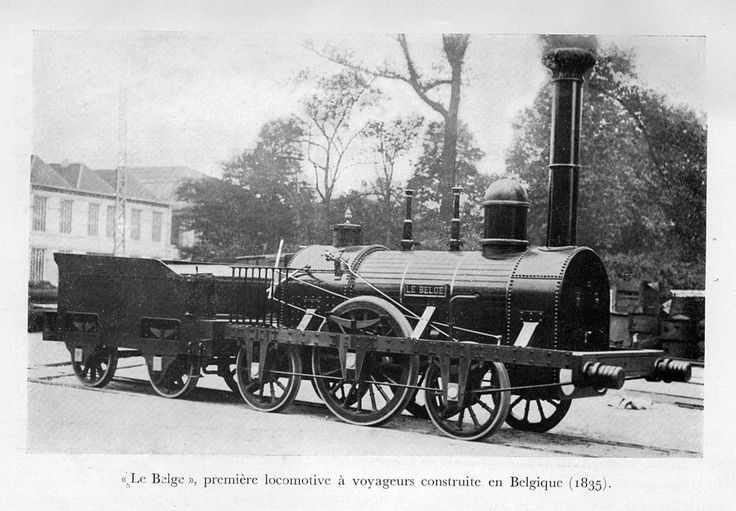
The first trains were Stephenson engines imported from Great Britain. The engines were called Pijl meaning Arrow, Olifant meaning Elephant, and ‘Stephenson’ (obviously named after its designer). They pulled bench-cars and diligences.
On the return from Mechelen, the Olifant pulled all 30 cars. By 1840, Ghent, Bruges, Ostend, Antwerp, Mechelen, Brussels and Leuven were connected. The lines that had to reach Liège, Mons and Kortrijk were partially completed. In 1843, when the major East-West/North-South axes were complete, private companies were allowed to construct and use their own rail systems. These were crucial in the industrialisation of the country.
In 1870, the Belgian state owned 863 km of rail lines, while the private enterprises owned 2,231 km. From 1870 to 1882, the railways were gradually nationalised. In 1912, 5,000 km were state property compared to 300 km private lines.
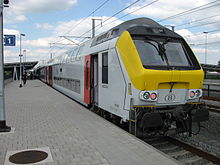
Full nationalisation was considered at the time but was not enacted until 1926, when the SNCB was started. It was named the SNCB (Société Nationale des Chemins de Fer Belges) or NMBS (Nationale Maatschappij der Belgische Spoorwegen), named in a similar way to the French rail network, SNCF. In 1958 the network was fully state-owned. On 5 May 1935 the SNCB started with electrification on the line Brussels North to Antwerp Central, 44 km.